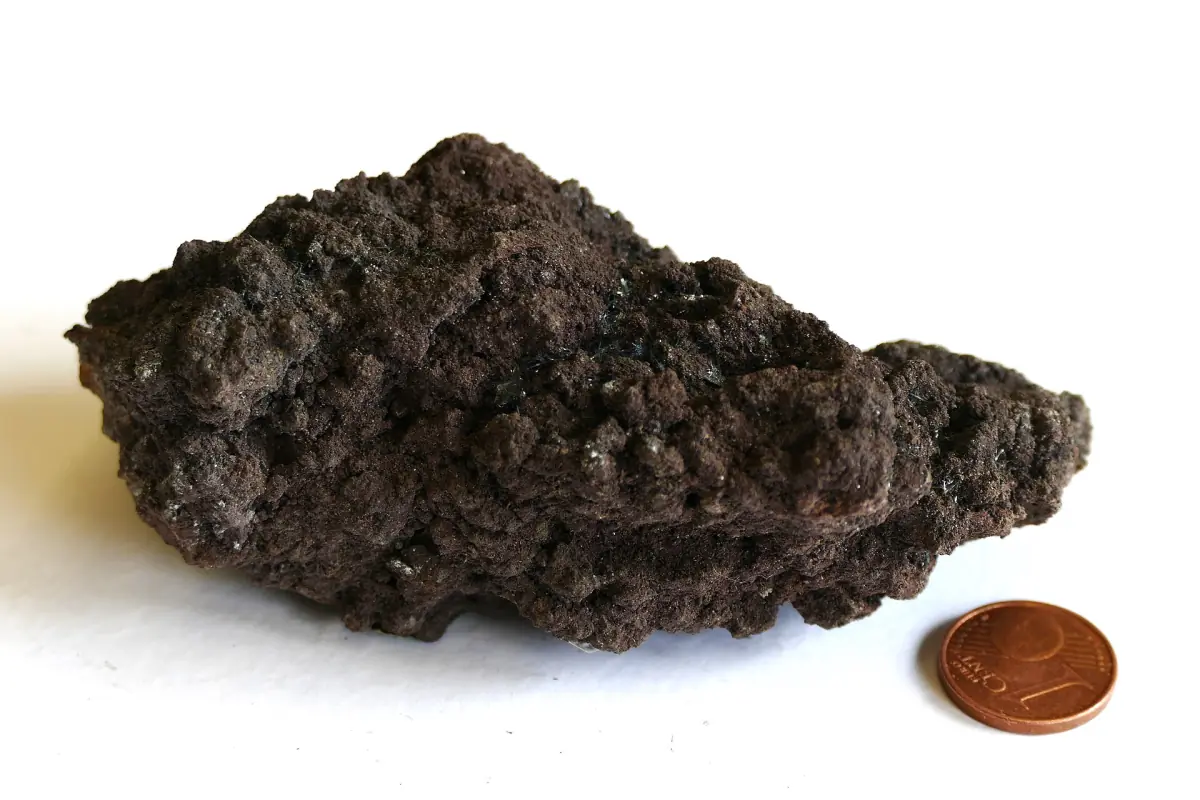
Mount Vesuvius facts at a glance
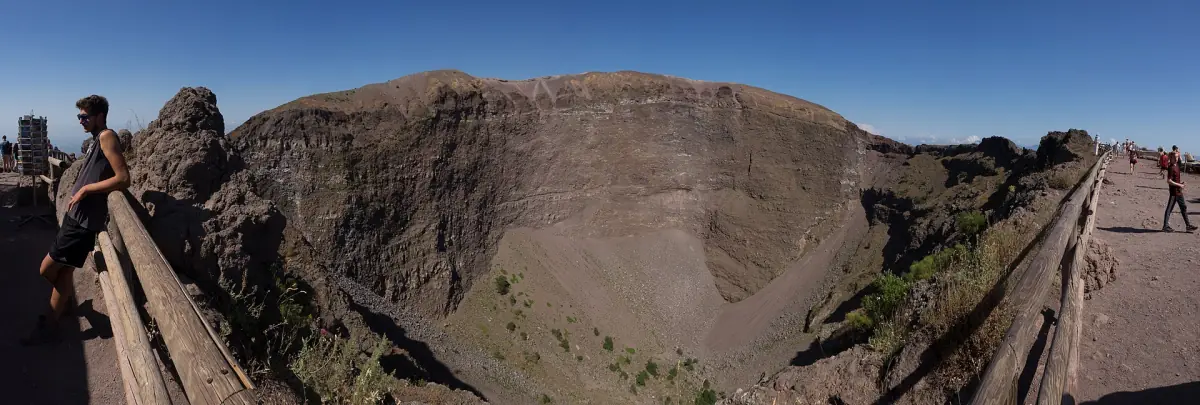
Mount Vesuvius rises beside the Bay of Naples. The cone visitors climb is the Gran Cono, reached on trail 5, Il Gran Cono. Around it runs Monte Somma, and the two belong to one volcanic complex, Somma-Vesuvius.
The volcano is monitored by the INGV Osservatorio Vesuviano. Its last historical eruption was in 1944, and the record reaches back to the eruption of 79 AD. See the eruption history for that story.
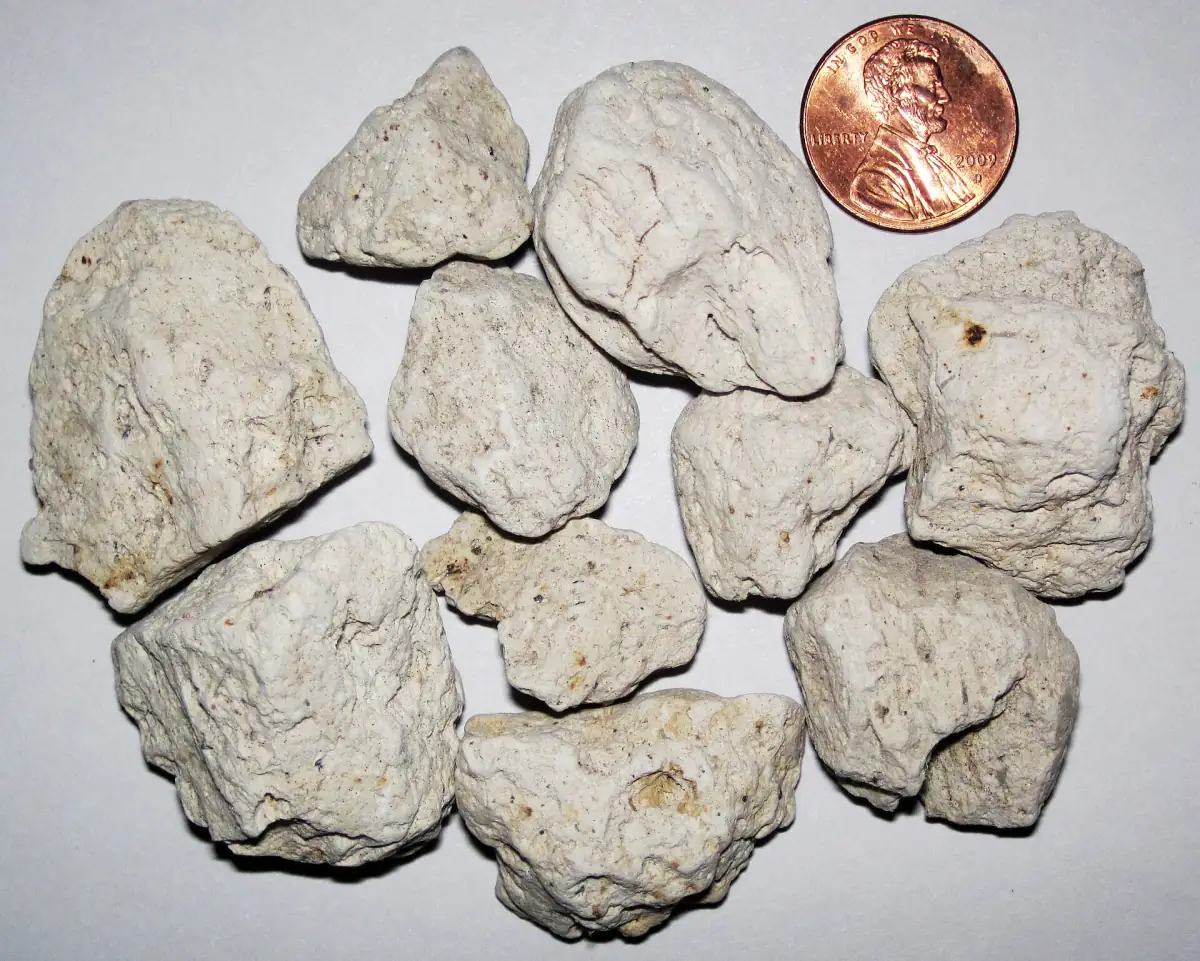
Our pick: the crater with a hiking guide
To see the cone up close with a licensed guide who knows the mountain.
Hand-picked tours, booked through Viator. Prices are indicative starting prices in euros (as of October 2026). Tap a tour for live availability and the current price in your currency.
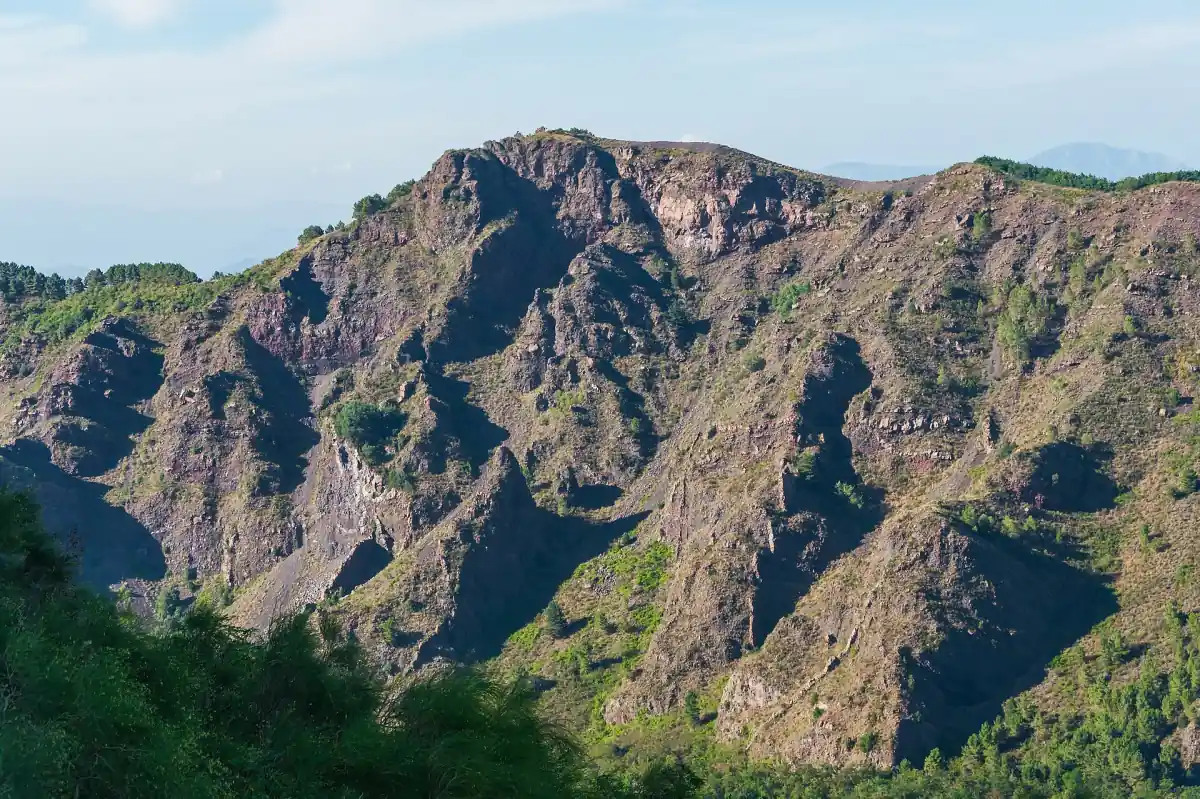
Guided hikes to the crater
Crater tickets, guided hikes and day trips from Naples, Pompeii and Sorrento, with live prices and availability. Check each listing for whether it includes a guide, an audio guide or transport.
The Gran Cono and Monte Somma
Vesuvius and Monte Somma are two parts of the same structure. The Somma-Vesuvius complex is why the mountain has a cone in front and a ridge behind. The paths on the two parts are not interchangeable, so a hike on one is not a hike on the other.
What the crater trail allows
The walkable section of trail 5 ends at the released areas. You cannot walk a full loop around the crater rim, climb the closed summit edge or go into the crater. The high northern and eastern rim stays closed. A guide or a transfer does not lift a barrier.
| Question | Answer in 2026 |
|---|---|
| Which trail leads to the crater? | Trail 5, Il Gran Cono |
| Walking time | 2 to 2.5 hours there and back, depending on the route rule |
| Adult ticket | EUR 11.68, reduced EUR 9.55 |
| Full loop of the rim | Not open |
| Who monitors the volcano | INGV Osservatorio Vesuviano |
For most visitors, one booked time slot on trail 5 is the whole crater visit. Allow the longer figure when you plan the day.
Monitoring and the red zone
The INGV Osservatorio Vesuviano watches the volcano. A quiet volcano is not an extinct one, and "last erupted in 1944" is not a promise about the future. This page gives no forecast. Current alert information belongs to dated official notices.
Civil protection keeps emergency plans for the area, including a red zone. They are precautionary. They do not mean an evacuation is ordered, and no fixed warning time or personal escape time follows from them.
Entry ticket and booking
The crater trail is sold by time slot with limited capacity, under a park decision of 29 June 2026. A late booking is not a guaranteed ticket, and there is no regular ticket desk at the crater entrance. Read the ticket terms in the shop you use before you pay, and carry the identity details or proof the ticket asks for. See Vesuvius tickets for the full picture.
Practical facts for the walk
- The path is steep, sunny and dusty, and the wind is strong at times. Wear sturdy shoes and carry water.
- The park can close the trail when weather orders require it, so check before you leave.
- Published entry hours start at 09:00. The closing hour changes with the season. See opening hours.
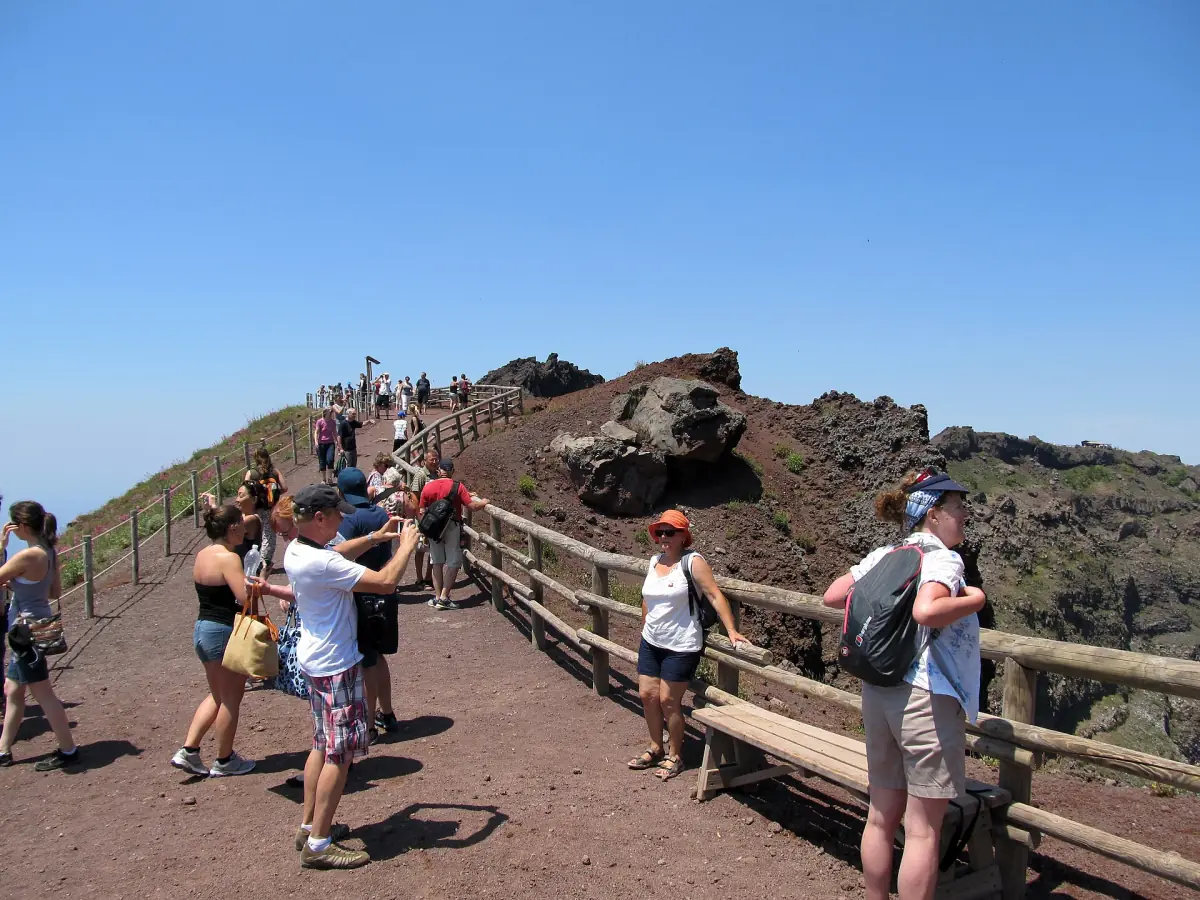
Mount Vesuvius facts: frequently asked questions
Is Mount Vesuvius an active volcano?
It is monitored by the INGV Osservatorio Vesuviano, and its last historical eruption was in 1944. A long quiet period does not mean the volcano is extinct.
What is Monte Somma?
Monte Somma is the ridge that belongs to the same complex as the Vesuvius cone. The two together are called Somma-Vesuvius.
Can I walk all the way around the crater?
No. Only the released section of trail 5 is open. The high northern and eastern rim is closed, and a guide does not change that.
How long is the walk to the crater?
Plan for 2 to 2.5 hours there and back, depending on the route rule. Conditions on the day can change this.
What is the red zone?
It is the area covered by civil protection emergency plans around the volcano. It is precautionary planning and does not mean an evacuation is in force.